



Common Bromeliad Bacterial Disease – Bacterial Leaf Spot
Author: admin3 Comments
Diseases are more than a nuisance for bromeliad plants, if they are left untreated, the diseases can kill them and/or spread to other healthy plants in your home. Prevention is always the best course of action for treatment.
Bacterial Leaf Spot – (Erwinia carotovora subsp. carotovora)
- Symptoms – Erwinia carotovora subsp. carotovora is the most common pathogen found around bromeliads. The leaf infection usually starts as pinpoint spots that are water-soaked and yellow to pale brown. The lesions are sometimes surrounded by a diffused yellow halo. When the humidity is high and temperatures are warm to hot, the spots expand rapidly, becoming slimy, irregular, and sunken with light tan centers, darker brown borders, diffused yellow margins, and may involve the entire leaf in a few days. The result is yellowing and total collapse of the leaf.
- Control – Obviously the best route to take is prevention. Keep an eye on your watering habits; give your bromeliad a chance to dry out a little between watering, and water only the soil surface. Avoid overhead irrigation and splashing water on the leaves, this helps with spreading the disease. Water your bromeliad plant early in the day to promote rapid drying of the foliage. It’s very important that you separate infected plants from apparently healthy plants when disease is first noticed. Carefully remove and destroy seriously infected plants and plant parts. Handle these plants with disposable plastic gloves to avoid contaminating other plants. Be sure to sterilize any contaminated pruning knives, tools etc.
If you enjoyed this, please share it!


3 Responses to “Common Bromeliad Bacterial Disease – Bacterial Leaf Spot”
Leave a Reply
Resource Download
Hechtia Care Cheat Sheet
Learn how to care for your Hechtia bromeliad with this quick and easy informational guide.
Learn More
Ask an Expert
Questions about bromeliads?
Our experts love a challenge!
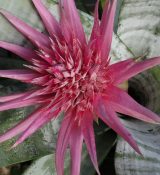
Monique
Bromeliad Aechmea
Photo of the Week
Submit your photo to be featured on the blog!
More Photo of the Week Winners
Submit Photo
my bromeliads leafs turned a light brown color,its watered on a regular basis keeping plant wet, i dont know what to do.do i try to take the brown tips off or do i just leave them,please let me know what to do i dont want to kil it it was a gift and its beautiful i need help…
I really appreciate your advice. Keep up the good work!
Flowers do not open-covered with gooey sap. Plant looks very healthy otherwise.