



Common Bromeliad Fungal Disease – Helminthosporium Leaf Spot
Author: admin6 Comments
Diseases are more than a nuisance for Bromeliad plants, if they are left untreated, the diseases can kill them and/or spread to other healthy plants in your home. Prevention is always the best course of action for treatment. In this article I’ve listed the symptoms and Control methods for the common Bromeliad fungal disease Helminthosporium Leaf Spot.
Helminthosporium leaf spot – (Helminthosporium rostratum)
- Symptoms – Leaf spot symptoms tend to vary with each pathogen/host pair from very small (pinhead size), solid brown to purple color lesions or spots to expanded lesions with bleached centers that girdle the leaf blade. Severely infected leaves turn purple or reddish color, giving the turf an overall purple cast. Severely infected leaves will eventually wither and dry to a light tan color. Distinct patches or patterns to the disease are usually not obvious. “Melting” occurs under severe infections as turf areas thin and die. Lesions on stolons (stems that grow along the surface of the ground; a method of plant vegetative propagation) are dark purple to black.
- Control – Usually when plants are exposed to overhead irrigation or rainfall, they are more susceptible to disease (you may want to try sub-irrigation). Although many growers have reported that poorly fertilized plants are more susceptible to Helminthosporium leaf spot than well fertilized plants, research has not established this relationship. If you keep your Bromeliad plant growing in full sun, it’s more severely affected by this disease, rather than if your Bromeliad was grown under reduced light (50% shade). This may be partially due to the stressful conditions of sun production which result in a somewhat chlorotic plant (An unusual or abnormal yellow color of green leaves or other parts of plants). Even weekly treatments with fungicides which are effective under shade conditions are not sufficient to control this disease under full sun conditions. The best control here is prevention!
If you enjoyed this, please share it!


6 Responses to “Common Bromeliad Fungal Disease – Helminthosporium Leaf Spot”
Leave a Reply
Resource Download
Hechtia Care Cheat Sheet
Learn how to care for your Hechtia bromeliad with this quick and easy informational guide.
Learn More
Ask an Expert
Questions about bromeliads?
Our experts love a challenge!
Monique
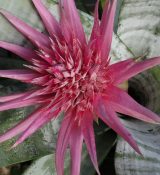
Bromeliad Aechmea
Photo of the Week
Submit your photo to be featured on the blog!
More Photo of the Week Winners
Submit Photo
I enjoy growing bromeliads. One mother plant had six pups and 5 have lived of those 5 two were left to grow on until the mother plant faded away. I cut the remaining pups at the base and repotted. They are doing fine. One of the 3 others developed a brown spot in the middle of one leaf. It’s not spreading. The other two were left out on the balcony in mid summer, and several of the leaves withered and are still on the plant. Is there anything I can do for them? I brought them inside and put in a cooler area with less sun where they have been for two months or so. Not much growth however. What would you suggest?
I purchased a Bromeliad yesterday. It has a whiteish cover on all the leaves (both sides) Is that suppose to be there. It is varigated with the green on the leaves.
Does the author of the above info NEVER respond to these poor people’s questions and problems that they have asked for help with? I imagine poor Mr. Trani’s plant has gone on to a better place given that he asked for help back in 2007 and never got it!!!!
Sorry for the lack of responses. We do cover all these questions within our blog posts. A simple site search or dig through our categories would yield the answer. This is a hobby site ran by a couple people and we lack the bandwidth and time to answer every single comment on every blog post, but we do our best. We also encourage others to reply and help if you have the answers. Thank you!
What fungicides do you use for any diseases with bromeliads?
Use a fungicide that is NOT copper based (copper based fungicides will kill a bromeliad). Avoid such brand names as Kocide and Phyton 27. Others that are not copper based should be fine.