



Growing Bromeliads Outdoors Overview
Author: admin51 Comments
Bromeliads can be used in the landscape in frost-free areas or grown in containers that can be moved indoors in areas where freezes occur. Since bromeliads require minimal care, they are an asset in the landscape.
In south Florida, bromeliads can be grown outdoors unprotected during most winters. In this area, people enjoy bromeliads for their graceful and decorative foliage, flowers, and fruit year round.
Some bromeliads tolerate low temperatures. The graceful, spiny Bromelia penguin survives north Florida conditions, provided it is grown in a protected area. However, extreme cold temperatures will scorch and injure it. Cold damage to a few leaves will destroy the symmetry and beauty of the plant for a long time.
In areas where frost and freezing temperatures are common, covering with plastic or cloth may offer some protection. However, it is a extremely tedious job to cover the plants, and the covers are unsightly. In addition, mechanical breakage of leaves often occurs. A more practical way to prevent cold damage is to grow bromeliads in containers with a potting mix and sink the containers into the ground. When freezing temperatures are predicted, pull the containers out the ground and move them into a garage or other protected area. While indoors, the plants should receive some light during the daytime. When temperatures are above freezing and no more frosty nights are predicted, the plants can be placed back into the landscape and mulched to hide the pot edges.
For a summary of some of the best varieties to grow in the outdoor landscape, be sure to check out this post.
If you enjoyed this, please share it!


51 Responses to “Growing Bromeliads Outdoors Overview”
Leave a Reply
Resource Download
Hechtia Care Cheat Sheet
Learn how to care for your Hechtia bromeliad with this quick and easy informational guide.
Learn More
Ask an Expert
Questions about bromeliads?
Our experts love a challenge!
Monique
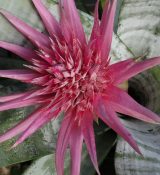
Bromeliad Aechmea
Photo of the Week
Submit your photo to be featured on the blog!
More Photo of the Week Winners
Submit Photo
Thank you for your information. It has helped me more than any other web site in understanding how to care for my bromeliads in Seattle.
I live in Mesa AZ and wonder if I can plant a Bromeliad into the ground? If so, should it be in a shaded place as it get’s very hot here in the summers?
Thank you,
Sharon Johnson
[email protected]
@ Sharon Johnson. Do you know what kind of Bromeliad you have? That would really help me to answer your question; because the amount of temperature a Bromeliad can endure varies from one species to the next.
Take a look at my post Caring For Bromeliads – Part Two – Temperature. It describes the general temperature that Bromeliads like (it’s not species specific), but it may help.
A lot of the Bromeliads that like hotter temperatures, tend to like the temp. around 80 degrees F. So your guess was right on about finding a shady spot to plant your Bromeliad for the summer; due to the extreme temperatures Mesa gets that time of the year. On the other hand, your particular Bromeliad may not like a lot of heat! Let me know what kind of Bromeliad you want to plant outside, and I’ll try to help answer your question better.
Happy Growing!
I just purchased two V. flammea:Red flowers, recommended for beginning bromeliad growers and I want to keep them outdoors on my deck in the summer. They are in pots and I live in the Chicago area. Can I do this? Marylou
@ Marylou. If your deck is covered you should have no problems, as long as your bromeliad isn’t in direct contact with sun! With the right amount of sun protection, these bromeliads can withstand long periods of temperatures around 100 degrees F. without any ill effects.
The level of humidity surrounding your plants is important and care should be taken to maintain the humidity needed (about 60 percent humidity); living in Chicago (during the summer) this shouldn’t be a problem for you. But if you notice that the humidity seems a little low, you can try misting your Bromeliad to add a little. You could also try surrounding your V. flammea with other plants to add some humidity.
During the summer, watering or misting should be carried out after the heat of the day has gone (late afternoon or early evening). If you choose to do so in the mornings, be sure that it’s early so that water on the leaves has dried off before the heat of the day hits them and causes leaf burn.
I hope some of this information is useful to you, if you have any other questions, please feel free to ask! I’ll be posting general growing specifications for Vriesea bromeliads in the near future, so keep your eyes peeled!
Good luck, and happy growing! 🙂
I would like to plant bromeliads near my pool which gets morning shade and afternoon sun. I live in Los Angeles about 12 miles inland. Could you recommend an appropriate type?
I just purchased some bromeliads and live in Central Florida where summers are very hot with high humidity.I would like to plant them outside.I was planning to plant them where they get morning shade and afternoon sunlight or should i do just the opposite?
I think you may want to take the opposite approach. Mine get some morning sun from the east and are shaded from the heat and light in the afternoon.
I have just purchased a Guzman Puna Gold and need help in keeping it healthy. I live in Tallahassee, Fl so I will keep it potted out doors and bring it in @ 45 or less. It is a rather large plant with 2 beautiful flowers at present. There are 2 shoots of about 2 in in height.
I like in Louisville, Ky. and I would like to buy a bromeliad and plant it in a pot and sit it on my deck near my pool. That area does not get a lot of shade, maybe very little late evening shade. What type should I buy or can I?
I live in Ohio, near Cleveland. I’d like to plant my bromeliad outside, but the weather is so unpredictable. Should I just keep it as an indoor plant?
Thanks.
i just bought a a red flame colored Bromeliad and i have kept it indoors as i live in Columbia Maryland .i would like toknow howmany times do i need to water it and doi need to spray it everyday to give it some moisture?
I live in Ohio and recently purchased 3 bromeliads in Florida. I thought they would be acceptable in the sun since they were from Florida. However, their leaves are turning yellow. I also believe I read that they should mostly be watered by rain. Should I put them in a partly shaded place?
I just purchased a Bromeliad and it won’t open I have it outside right now and mushrooms have been growing in the pot I have it in. It is’nt in direct ligh but it is on the patio. It is real flat and wont open what do I need to do. Thanks
We live in the Tampa area and have several bromeliad plants in the ground outside. They both bloomed initially, then put on pups which we did not remove. None of the pups have bloomed. Should we have removed the pups right away and replanted them?
Del
We live along the Nature Coast, FL. and have a beautiful bromiliad which recently we found 3 pups. My husband removed them and planyed them in a small pot and they are growing very nicely.. Hope this will work for you.
I have a few large boulders in my yard and would like to plant some bromeliads on them. the rocks have holes and crevices in them. I have seen this effect in the Fairchild Gardens in Miami, FL. Problem is, I don’t know how to anchor them in the rocks. Could you give me some advice on how to do this? Hoping to hear from you soon.
Diane Haumann
HELP HELP HELP !!!!!
ARE WE SUPPOSE TO CUT THE FLOWERS WHEN THEY DIE OR JUST LEAVE THEM (since they oly bloom once in their lifespan)????????????? Thank You
Are they poisonious to cats
I can tell you first hand that they are not poisonous to cats. I have 3 cats and one cat that has almost destroyed mine. She keeps eating the leaves. It does however cause her to throw the leaves up. She also loves nibbling on the leaves as well.
I have a aechmea faciata and live in south Texas. the pink is there but browning inside flower do you cut the flower or do they rebloom themselves. it was all pretty pink with the purple buds inside before we had a temp of 40, then warmed up it is outside in a planter. it is still the pretty pink petals.thank you Sherry
I just bought some Bomeliad plants and live in Virginia.
Can I plant these plants outdoors?
Joy
I was given a bromeliad as a gift from my mom, the card doesnt say what species it is. She said the florist instructed her to have me water it in the center, and I did (the first day) and it was dead by the 2nd day, that is when I read the insert in my plant and it said water amoung the lower leaves only. Will my flower in the center come back? It is flourishing otherwise.
I live in north texas plan to plant these in a very shaded area with moist ground along a 8 ft fence line under evergreens that have been trimmed up about 4 ft
direct sunlight is minimal and shade is primary. should I leave these in a container to remove of plant directly into the soil. I do not think frost could reach them with the foilage above the soil does remain moist in the spring and dry during summer and winter purple jew has been thriving for quite sometime in this setting.
June 16, ’09. My pink Bromeelaid was brought from AL this last March, it had just one stem then, but now has two and also another baby starting up. The first ‘stem’ and its leaves now has its first pink flower’s stem hanging over the pot and is almost in full bloom, it’s lovely! The leave’s edges are quite pikery w/sawteeth edges. On what site can I find any pictures so as to know what kind of a Bromelaid I have?. Thank you for any information you can provide.
Good question Haps McNamara ,, that’s one of my same question,, my mom gave me one, but the flower already dried and the leafs are still green. She said that only put water inbetween the leafs, not on the dirt because it will die, is that true?
I stayed at the Ritz Carlton Orlando FL last night and when leaving my room for the award breakfast I was there to attend a woman was pushing a cart along the hallway of my floor. She had seven plants on the cart and when asked told us that she was the plant supplier for the resort. The plants on her cart “did not meet the standards of the hotel and were to be thrown away.” I work for a non profit and we are so used to resueing people that I just spoke up and said I’ll take them….to me I didn’t see inadequate plants but instead alot of beauty. So I took them and she was happy…said she could only have so many throw away plants at her home….so now I am researching the seven plants I will plant onto my east facing covered second floor deck in downtown Mount Dora, central FL. If I take pictures can you tell me the exact plant type? If I asked the woman she would have known but I didn’t think of that this morning. I will place one at each of our six group homes and leave the last one in my home as a memory of saving these beautiful plants!
I live in New Orleans and we had unusually cold temps for a night or two recently. All of my bromeliads leaves have yellowed. Can i save them? and how would I do this? Thank you
I purchased a bromeliad with red flower it is in a pot but seems to be getting bigger.
HOW OFTEN SHOULD I WATER IT!
I LIVE IN TEXAS AND WANT TO KNOW WHERE IS THE BEST PLACE TO HAVE IT. INDOORS OR OUT?
IF OUTDOORS HOW SHOULD I PLANT IT?
Hi I live in California and I need help, could someone let me know which Bromelaid is best to plant in my area with minimum amount of shade.
Thanks
I want to add some bromeliad to our tropical garden and have areas of everything from full on sun to almost constant shade. I live in central Texas. I love these plants but have had no luck doing them indoors. I’m told some are better than others for my part of the world and wanted some advise on which ones to consider. We have created a tropical garden in our backyard so the garden gets regular water and we have selected plants offering everything from full out sun to almost constant shade with everything in between. Can you recommend some specific types of bromeliad we can add to our tropical paradise?
Hello, I received one of these plants last Christmas. It is the variety with a large spiky, pink flower. I have watched the plant grow large and it’s flower has lasted these 5 months. The only care has been to set it near a window where it gets a good bit of indirect light, and I have poured a small amount of water into the middle of the plant where a ‘cup’ has formed. I only add water when it is completely dry, so it has only been about 4 times. The plant has outgrown the small pot to say the least. After looking unsuccessfully online to identify the plant, I called the florist, whose sticker was still attached to the pot. The florist was helpful and told me the following: you are watering the plant correctly, the flower blooms one time, lasts a long time, then dies. Around this time the plant puts out ‘pups’ around the base, which should be removed and planted to make their own flowering plants. I actually planted mine outside because it is clear that it will die soon anyway without a larger area. Oh well!
Have 2 potted Bromeliads which got hit by frost,can they be revived? I live in New Zealand .
Hello,
A little over one month ago I purchased a beautiful Bromeliad and I’ve already killed it. The woman at the flower shop told me to keep the pockets at the leaves with water so I did that and I believe it has drowned. It started to get really stinky where the flower is in the center and so I would flush the water and add fresh always making sure it had a bit of a pool around the flowered center. The soil in it’s pot never dried and the leaves around the flower started turning yellow brown and now I can pull entire leaves out of the center. I’d like to try again, but I’d like specific instructions so I don’t kill another gorgeous plant. Any helpful suggestions you can offer will be greatly appreciated.
Thank you,
Juliet
I live in LA area of California; got about half dozen plants to keep on covered patio. The re/pink/purple ones doing ok but the yellow one turned brownish-think I killed it somehow. We had couple of days of over 100 temp but just yellow one affected. I’m watering around base, not in the ‘cups’ of the plant per instructions with plants. How “keep soil evenly moist” is moist.?? They dry out fast..
thanks
I spied a terrestrial bromeliad penguin growing in the under story/undergrowth of a semi-public area of a large church field in Bonita Springs, FL. I was curious about this bromeliad, since I have some pineapple bromeliads growing outside the house. (just take the tops off the supermarket bought pineapple, peel back/off the bottom few leaves and you will see root-lets, plant in soil, and voila!) Back to the penguin. So, upon research, I find the fruit of the penguin is, like pineapple, edible. I clipped a stalk from the plant, ala pineapple, and harvested the yellow fruit. I chewed the fruit, quite a fibrous pulp, saved the seeds (50/$5 on ebay?) and spit out the pulp. The penguin has a delightful sweet apricot flavor. Bon appetite!
I live in south Fl and we have problems with mosquitoes in standing water. I grow Bromeliads out doors. Is there a way to prevent their larva with something that may be placed in the water? And I do not want to harm the plant.
I have a Bromeliad that has sprouted a pup. The mother’s base leaves are a beautiful green but the flower is browning and drying up.
Should I transplant the pup and cut the mother’s top??
Thanks for your advice ;>
How big is the pup? Usually once they are about 1/3 to 2/3 the size of the mother plant they can be removed and transplanted to their own pot. (Or if you see roots growing on the pup, that’s also another sign it’s ready to go!).
I just received about 10 decent sized bromeliads. I would like to plant them next to my pool which receives direct sun all day long due to it is not screened. I live in Orlando so we have hot & rainy days. Where is the perfect place to plant these?
I just bought two bromeliad plants and I wondered how I wondering about the watering plus how often. i plan to plant them outside in a shaded area.
I can’t found out how much water they need and how often they need watering
We water our bromilade once a week and keep it in a sunny spot in the mornings, then afternoon in the shade. hope this will help….
When I bring my bromeliad in for the winter does it still need light and water, or can I put it in the basement and forget about it like I do my amaryllis and other plants?
Allison– Bromeliads need light and water all year long. I’d find a well-lit spot in your house to put the bromeliad during the winter months.
When flower in the Center begins to dry, and pups have been removed should I cut the flower off, or will it fall off?
Theresa — Yes, you can cut off the flower with a sterile blade. However, if your bromeliad is already finished producing pups, it may start to fade away since it’s life cycle is near its end now. You can look forward to more flowers from your new pups!
Hi! I believe a have a red star bromeliad and i live in orlando, fl. my apartment only has north windows and a balcony facing north that gets light throughout the day. at first i had my bromeliad indoors, but it seems like it wasn’t GETTING quite enough light. will it be better outside?
It should be fine outdoors, just keep an eye on avoiding too much direct sunlight mid-day, and temperatures between 60-85ºF. For more information, visit our page: https://www.bromeliads.info/cryptanthus-earth-stars/
What is the cup?
It is the central part of the bromeliad plant. Goole image “neoregelia” and you will see the center of the plant has a cup-like shape that holds water.